
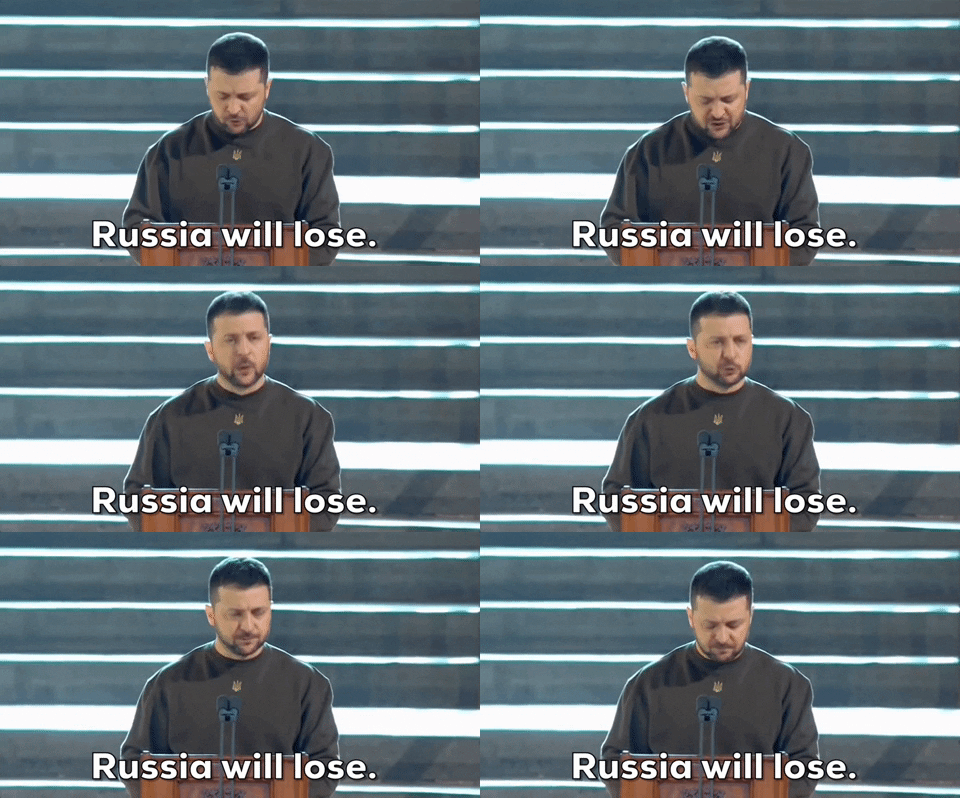
Title: Decoding Zelensky’s Announcement: Russia Proposes Economic Deals with U.S., A New Chapter in Geopolitics? In an unexpected turn of events, Ukrainian President Volodymyr Zelensky has announced that Russia is proposing significant economic deals with the United States. This revelation comes amidst ongoing negotiations to end Russia’s war against Ukraine, which seems to be under a looming June deadline set by the Trump administration. Historically, economic ties between adversarial nations have often played a crucial role in shaping geopolitical landscapes. The detente period during the Cold War is a prime example of how economic cooperation can lead to reduced tensions and even political rapprochement (Robertson & Mastanduno, 1982). However, it’s essential to note that such deals are not without their complexities and potential pitfalls. The proposed economic agreements between Russia and the U.S., if successful, could have profound implications for both nations as well as the global economy. For instance, increased trade might lead to a more interconnected world, fostering mutual understanding and cooperation. On the other hand, it may also exacerbate existing power dynamics, potentially leading to further conflicts or imbalances (Krasner, 1978). The timing of this announcement is particularly intriguing given the June deadline mentioned by President Zelensky. It suggests that these economic deals could be part of a broader peace agreement between Russia and Ukraine. However, it’s essential to remain cautious as details about these proposed agreements are still scarce. From my perspective, this news event signifies an opportunity for both nations to reconsider their relationships and potentially pave the way towards a more peaceful world. Yet, we must also remember that economic cooperation alone is not enough to ensure lasting peace; political will, mutual understanding, and respect are equally important factors in resolving conflicts (Gaddis, 2018). As we await further developments on this front, it’s crucial for us as global citizens to stay informed and engaged. Let’s hope that these economic deals mark a new chapter in geopolitics—one characterized by cooperation rather than conflict. Only time will tell if the world is ready to embrace such change. References: Gaddis, J. L. (2018). Strategies of Containment: A Critical Appraisal of Postwar American National Security Policy. Oxford University Press. Krasner, S. D. (1978). State Power and the Structure of International Trade. World Politics, 30(4), 526-553. Robertson, A., & Mastanduno, M. (1982). The Detente Illusion: A Reassessment of U.S.-Soviet Relations during the Brezhnev Era. World Politics, 34(4), 607-635.
Source: [Original Article](https://www.washingtonpost.com/world/2026/02/07/ukraine-russia-us-economic-agreements-war/)
#zelensky
Check out my AI projects on Hugging Face, join our community on Discord, and explore my services at GhostAI!