
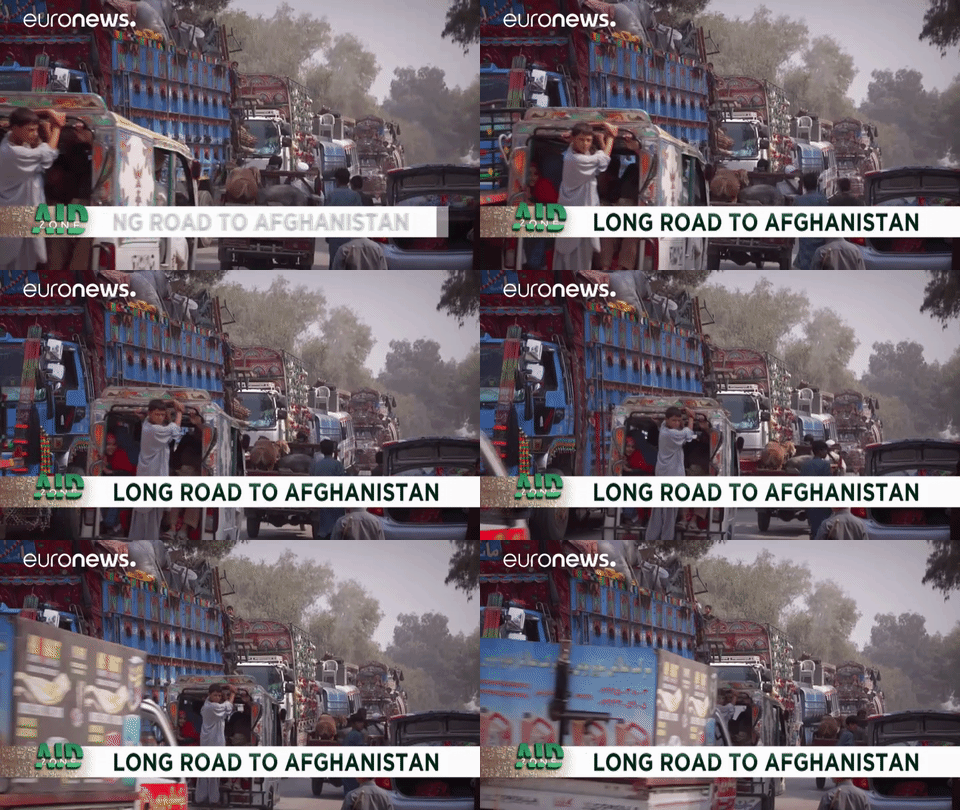
Title: The Longest Border Closure in Decades: A Crippling Blow to Pakistan-Afghanistan Trade and Central Asia’s Transit Route In an unprecedented move that has lasted over three months, the borders between Pakistan and Afghanistan have remained closed. This prolonged shutdown is causing a significant disruption to trade along one of the key transit routes in Central Asia, affecting not only these two countries but also neighboring nations. Let’s delve deeper into this issue, examining its historical context, potential implications, and my perspective on its significance. The Torkham border crossing, which snakes more than 1,600 miles through the rugged mountains and deserts separating Pakistan and Afghanistan, is usually bustling with activity. Hundreds of trucks pass through daily, carrying goods to and from both countries. However, this time around, the closure has been far from typical. The border disruptions are part of a larger dispute between Afghanistan and Pakistan that shows no signs of resolution anytime soon. The prolonged closure is not only affecting trade but also causing hardship for truck drivers like Anwar Zadran, who have been stranded mid-route with their vehicles full of goods. These drivers now spend their days huddled at roadside tea stalls, waiting for a sign that restrictions will loosen. The cold weather has made their situation even more challenging as they retreat to their trucks in the evenings to sleep. The impact of this closure extends beyond Pakistan and Afghanistan. Central Asia’s transit route is also paralyzed due to this prolonged shutdown, causing ripples throughout the region. Countries like Uzbekistan, Tajikistan, Kyrgyzstan, and Kazakhstan rely on this route for trade with other countries in Asia and Europe. The closure has disrupted their supply chains, leading to increased costs and delays in delivering goods. Historically, border disruptions along the Pakistan-Afghanistan frontier have been resolved within days or weeks. However, this latest closure is the longest in recent decades, indicating a deepening rift between these two neighboring countries. The dispute stems from various factors, including territorial disputes, water sharing issues, and political tensions. The potential implications of this prolonged border closure are far-reaching. If not resolved soon, it could lead to further economic instability in both Pakistan and Afghanistan. Moreover, the disruption of Central Asia’s transit route could have long-term effects on regional trade patterns and relationships. Countries may start looking for alternative routes to avoid potential future closures, leading to a shift in trade dynamics. From an economic perspective, this prolonged border closure is significant because it highlights the vulnerability of relying too heavily on one transit route. The disruption has shown that countries need diversified transportation networks to ensure uninterrupted flow of goods and services. In light of this, regional cooperation should be encouraged to develop multiple routes for trade facilitation. In conclusion, the prolonged closure of the Pakistan-Afghanistan border is causing significant hardship for truck drivers and traders while also disrupting Central Asia’s transit route. This situation underscores the need for diversified transportation networks and regional cooperation to ensure uninterrupted flow of goods and services. It serves as a reminder that political tensions can have far-reaching economic consequences, making it crucial for countries to address disputes promptly before they escalate into prolonged crises.
Source: [Original Article](https://www.npr.org/2026/02/10/g-s1-107945/pakistan-afghanistan-border-closed-trade-taliban)
#pakistan-afghanistan
Check out my AI projects on Hugging Face, join our community on Discord, and explore my services at GhostAI!