
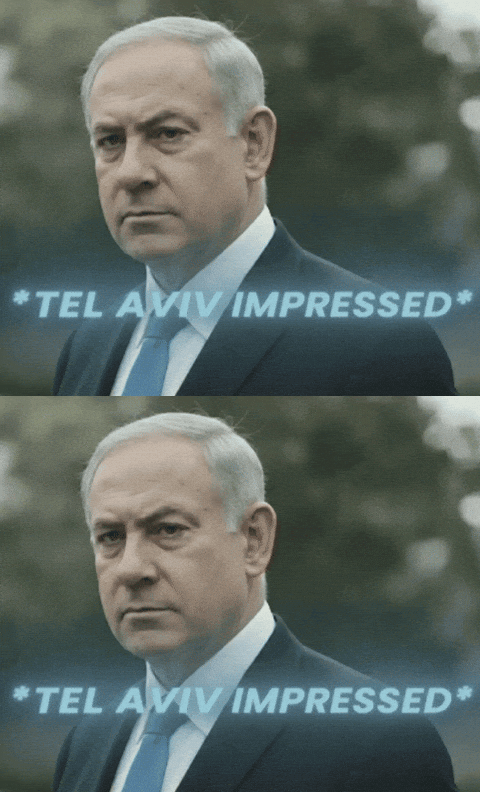
Title: U.S., Israel, and Iran – A Tense Triangle of Conflict in 2026 The recent exchange of strikes between the United States, Israel, and Iran has once again brought to light the complex geopolitical landscape that these three nations share. This latest development is a stark reminder of the historical context that underpins their relationship – one marked by tension, mistrust, and occasional outbursts of violence. Historically, the United States has been at odds with Iran since the 1979 Islamic Revolution, which saw the overthrow of the Shah’s regime and the establishment of an Islamic Republic under Ayatollah Khomeini. The U.S., along with its allies, has accused Iran of sponsoring terrorism and pursuing nuclear weapons – charges that Tehran vehemently denies. Israel, on the other hand, has long been at odds with both Iran and the Palestinians in the region. Its relationship with the U.S., particularly under previous administrations, has often been strained due to disagreements over how best to handle these conflicts. However, recent years have seen a strengthening of ties between Israel and the United States, largely thanks to President Trump’s unwavering support for Jerusalem as Israel’s capital. The implications of this latest round of strikes are far-reaching and multifaceted. On one hand, it serves as a stark reminder that tensions in the Middle East remain high despite efforts by various parties to broker peace deals or negotiate ceasefires. It also highlights the fragility of diplomatic relations between these nations – even those who appear to be on the same side (such as the U.S. and Israel) may find themselves at odds over specific issues or strategies. From a broader perspective, this incident underscores the need for continued dialogue and negotiation among all stakeholders in the region. While military action can sometimes achieve short-term goals, it is ultimately through diplomacy that lasting peace will be achieved. As such, any nation involved in these conflicts must prioritize communication and cooperation over confrontation if they hope to bring about a more stable future for themselves and their neighbors. In conclusion, the recent exchange of strikes between the U.S., Israel, and Iran serves as a stark reminder of the complex geopolitical landscape that exists within the Middle East. While it is easy to focus on the immediate implications of these events, we must also remember to look beyond them – towards a future where diplomacy replaces conflict as the primary means of resolving disputes in this volatile region.
Source: [Original Article](https://www.nbcnews.com/video/shorts/u-s-israel-and-iran-exchange-new-strikes-258520133853)
#u.s.,
Check out my AI projects on Hugging Face, join our community on Discord, and explore my services at GhostAI!